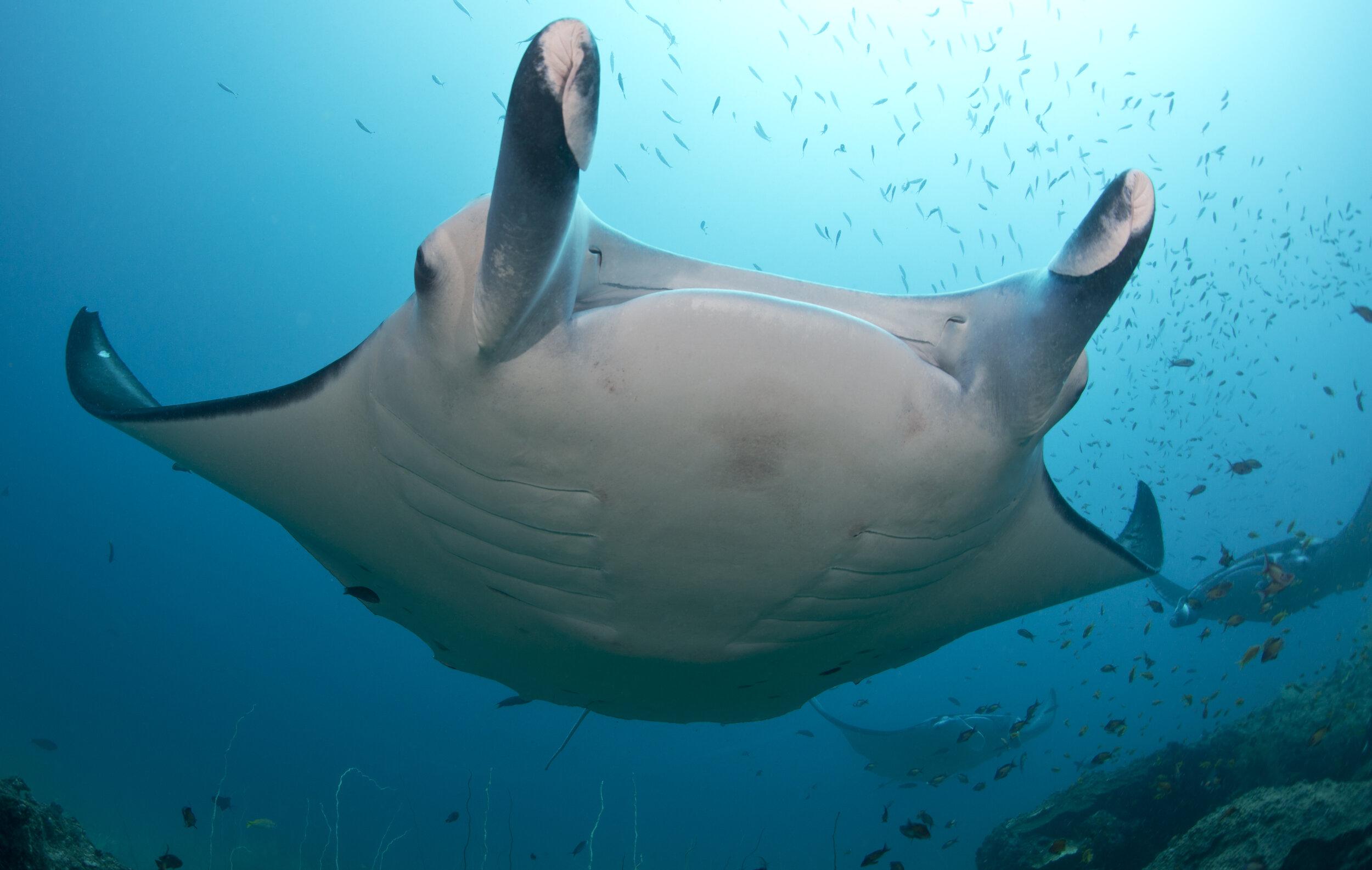
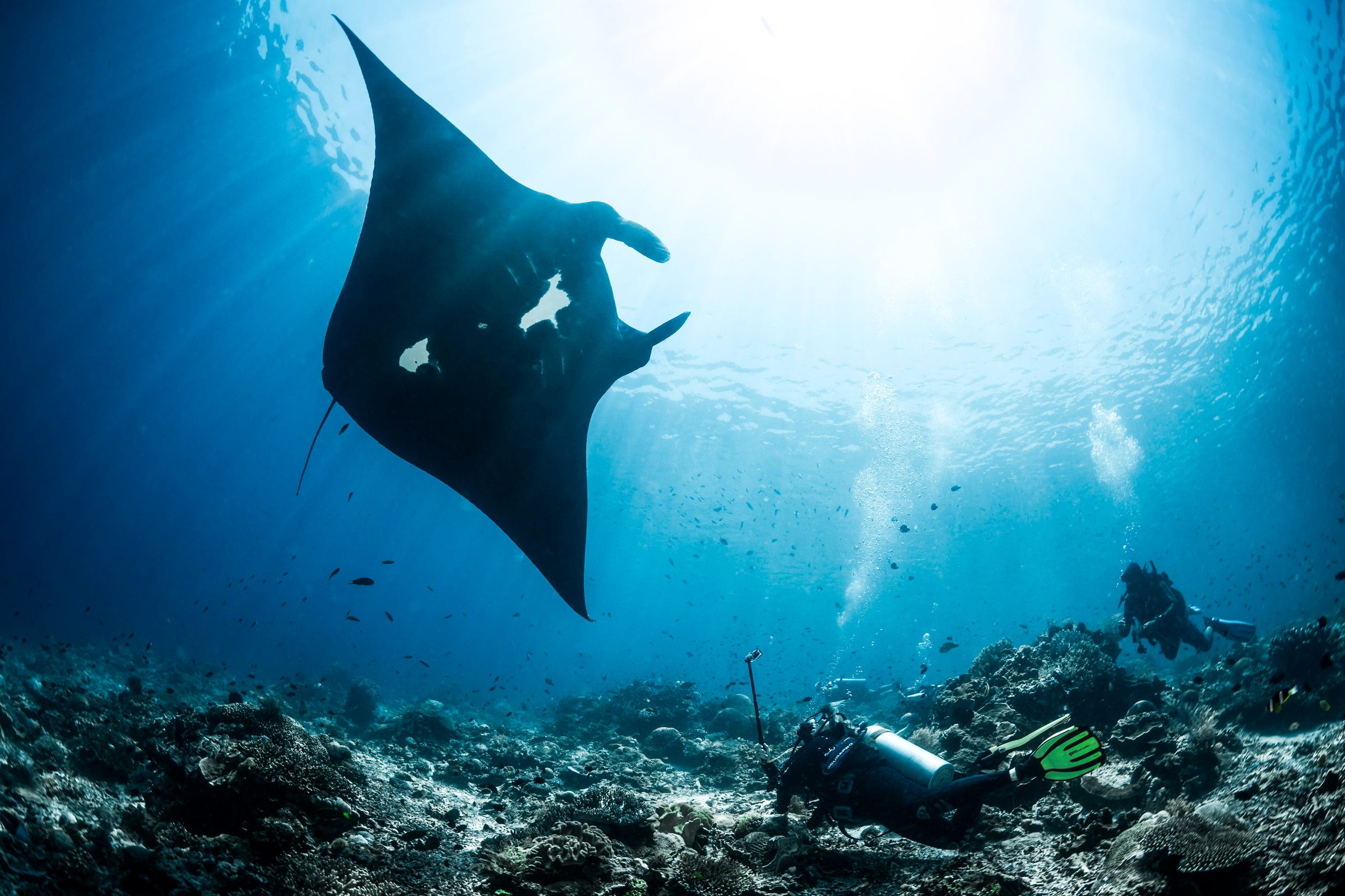
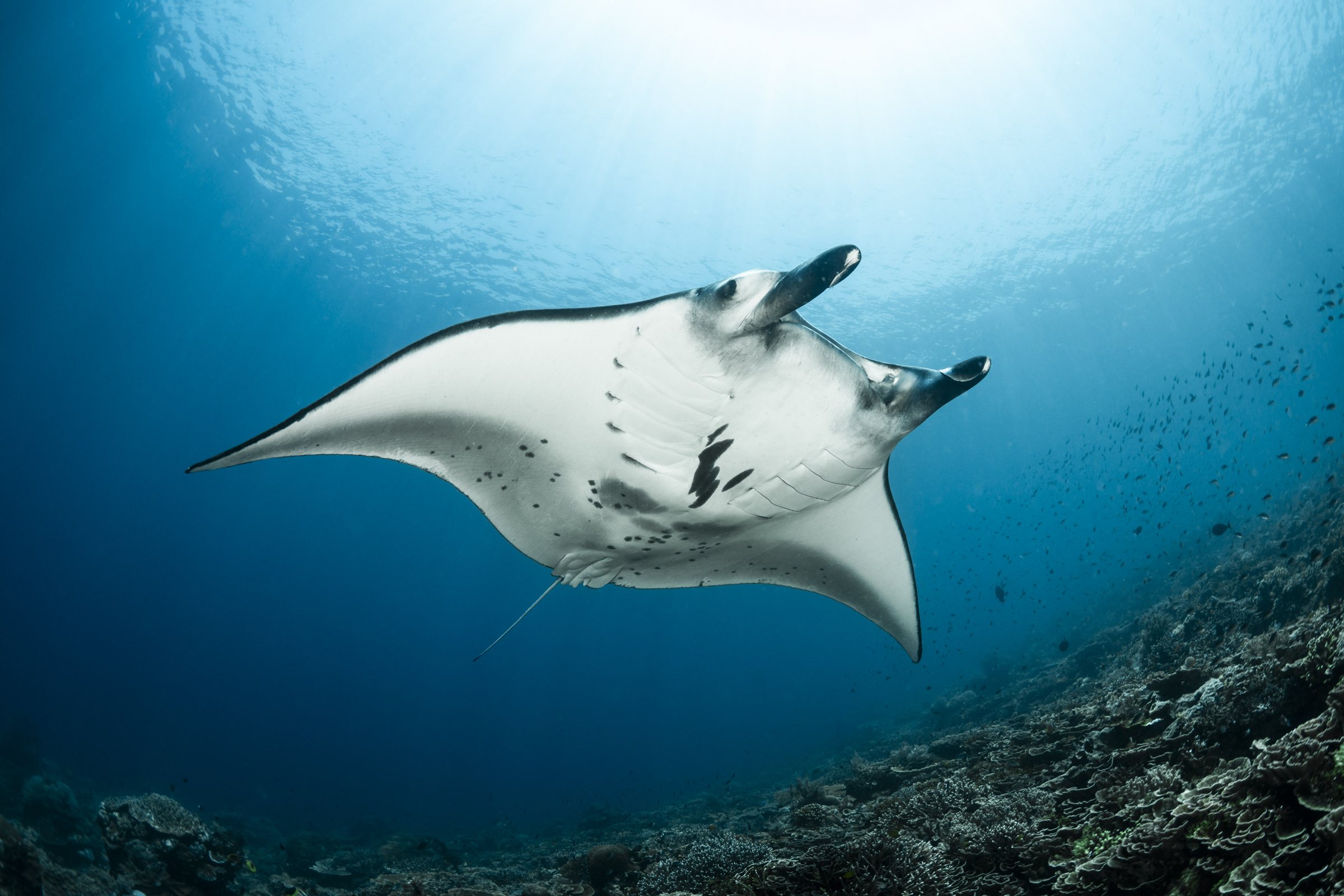
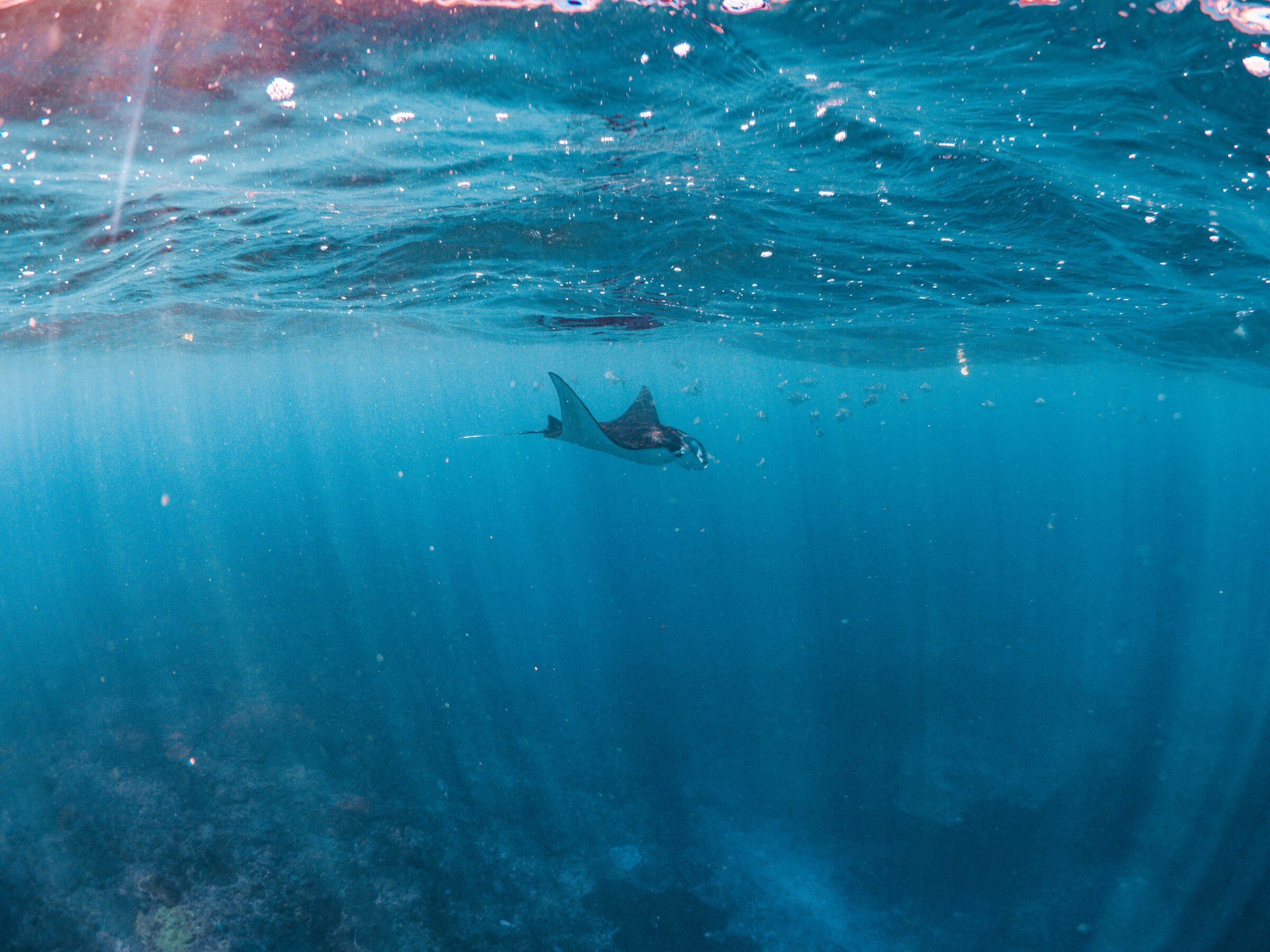
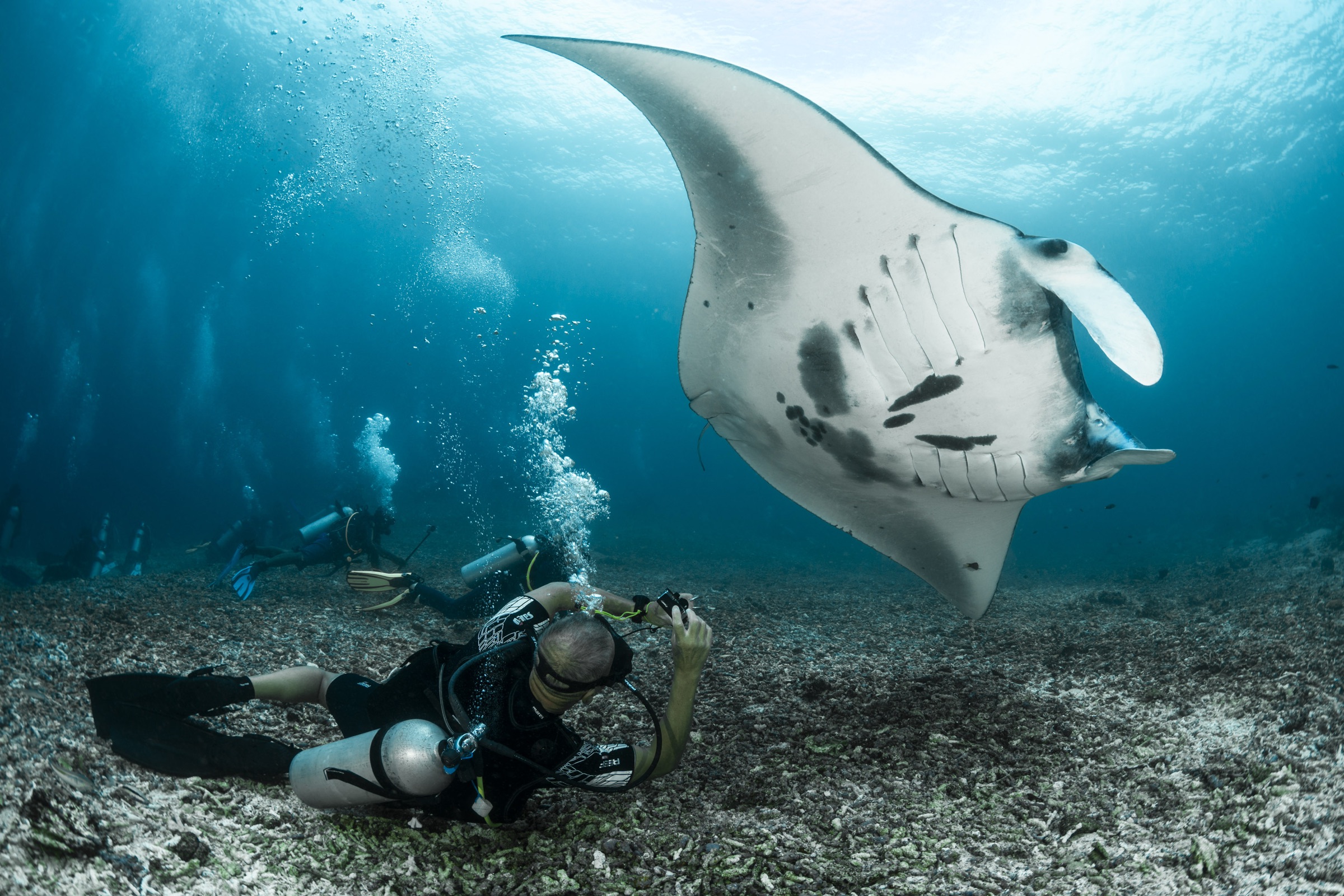
| Where it lives | Tropical and subtropical coastal waters of the Indian and Pacific Oceans, usually within a few kilometers of a reef. | Open ocean in all three oceans, including the Atlantic and Caribbean, where it lives beside the Atlantic manta. | Only the Atlantic, from the eastern United States and the Gulf of Mexico through the Caribbean to Brazil, including estuaries and river mouths. |
|---|
| Size | Most adults measured off Mozambique span 3 to 4.9 meters (10 to 16 feet); the largest seen there were a little over 5 meters (16 feet). | The largest ray in the world: about 7 meters (23 feet) from wing tip to wing tip. | Maximum size not yet established: most animals measured are juveniles 2 to 3 meters (7 to 10 feet) across, and size at maturity and at birth are unknown. |
|---|
| How to tell it apart | A pale mouth, shoulder patches that curve in from the spiracle (the breathing opening behind each eye), spots that can sit between the gill slits, and no spine at the base of the tail. | A dark mouth, white shoulder patches with a straight front edge, a bony knob with an embedded spine at the base of the tail, and a maximum size larger than any reef manta's. | Set apart from the oceanic manta by its underside spot pattern, V-shaped patches on its shoulders, star-shaped skin denticles (tooth-like scales), its tooth rows, and its DNA. |
|---|
| Recognized as a separate species | 2009, when an MMF-led study of mantas off southern Mozambique separated it from the oceanic manta. | 2009: the same MMF-led study restricted its name to the larger, more oceanic manta. | 2025, in a 15-author study led by Nayara Bucair with MMF co-authors including Jessica Pate; the type specimen came from our Florida team. |
|---|
| Breeding | Usually one pup after a pregnancy of about a year; the mother usually rests a year or more before the next. | Usually one pup at a time; females are thought to wait two or more years before the next. | Unknown: gestation length and size at birth have not been published, although southeast Florida holds potential nursery habitat for juveniles. |
|---|
| How long it lives | At least 30 years: individuals have been photographed across more than three decades. | Resighted up to 20 years after first being identified; harder to follow over time than reef mantas. | Unknown. |
|---|
| IUCN Red List | Vulnerable | Endangered | Not yet assessed |
|---|